8 Ways America is Missing Out: Why a Federal Permitting Pathway for Open Ocean Aquaculture Is Urgently Needed
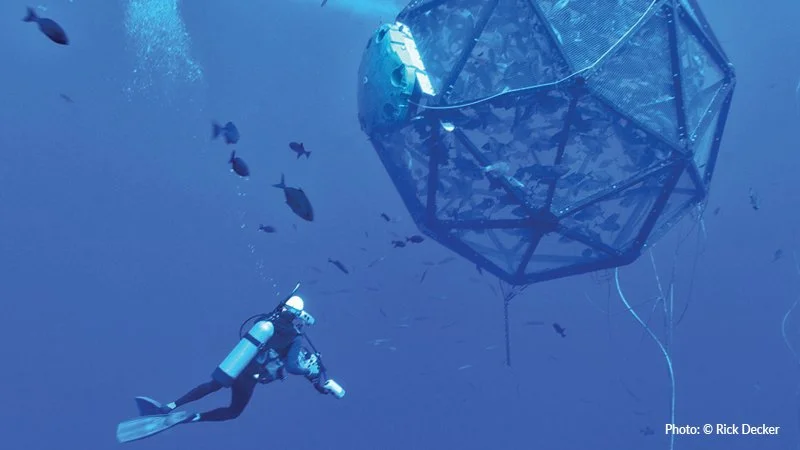
Eight years. Twelve federal and state agencies. One net pen.
That’s what it took for the first open ocean aquaculture demonstration project in U.S. federal waters to receive approval this year — underscoring just how difficult it is to grow a competitive aquaculture industry in America without a clear federal permitting pathway. As Congress considers bipartisan legislation to advance open ocean aquaculture in U.S. federal waters, Stronger America Through Seafood (SATS) today launched a new campaign highlighting the urgent need for a clear, predictable federal permitting pathway to expand American aquaculture. The campaign will run throughout October in recognition of National Seafood Month, an annual celebration of the importance of sustainable seafood and its value to American communities.
Read More
Read New SATS and EDF Op-Ed in The Washington Post: Here’s why the seafood on your plate had to be imported
New in The Washington Post: Stronger America Through Seafood (SATS) and the Environmental Defense Fund (EDF) together make the case for advancing responsible aquaculture in U.S. waters. SATS’ Campaign Manager Drue Banta Winters and EDF’s U.S. Aquaculture Campaign Director Maddie Voorhees write that while aquaculture is booming globally, the U.S. ranks 20th in production — with not a single commercial-scale finfish farm operating in federal waters. The bipartisan MARA Act would establish a science-based pathway to move American aquaculture forward responsibly. As Drue and Maddie write: “We represent what seems like an unlikely coalition — the Environmental Defense Fund and the food industry — but aquaculture is a sound and science-based practice that, when done responsibly, can be remarkably good for the environment.”
Read More
America Can't Wait Another Year: Congress Must Act to Build a Stronger, More Resilient Seafood Industry
America needs more seafood — and we can grow more of it in our own waters — but only if Congress puts in place the permitting framework needed to support responsible growth of the industry in U.S. federal waters. While climate change is creating new challenges for America’s seafood supply, our wild fisheries are already harvested at sustainable limits. As we look to diversify our food sources and strengthen our domestic seafood production, open ocean aquaculture would complement our wild fisheries and help build a more resilient seafood system. But congressional action is needed to unlock aquaculture’s full potential in the U.S.
Read More
Advancing Regenerative Aquaculture to Help Build the Future of a New Industry
As the U.S. works to advance open ocean aquaculture, innovation is critical to building a modern, sustainable American aquaculture industry. That means developing new technologies while also connecting science, workforce development, entrepreneurship, and practical support to the producers and businesses who seek to utilize those innovations to grow more sustainable seafood for American families. A new regenerative aquaculture innovation hub, the Center for Applied Aquaculture Innovation (CAAI), is putting that approach into practice. The Center demonstrates how the latest regenerative aquaculture techniques—paired with pragmatic approaches to entrepreneurship and adaptation to a changing climate—can help nurture modern business success and revitalize the ocean, even for small producers. Regenerative aquaculture focuses on the generation of net environmental benefits such as mitigating pollution, biodiversity loss, and climate pressures.
Read More
America's Next 250 Years Will Depend on Open Ocean Aquaculture
As the nation marks America 250, the ocean that helped build America can also help drive its future. Working waterfronts have shaped American communities for two and a half centuries, from the fishing villages and ports that fueled early coastal economies to the fishermen, harvesters and maritime industries that continue to sustain communities today. But the next chapter of that story cannot be written by wild-catch alone. The U.S. already harvests wild fisheries at their sustainable limit, and global seafood demand continues to climb. Meeting future demand will require growing more seafood here in our ocean waters through open ocean aquaculture.
Read More
National Ocean Month: Fisheries Science Points to Open Ocean Aquaculture as a Tool for Ocean Stewardship
National Ocean Month is a reminder that "we don't have to choose between thriving fisheries and sustainable aquaculture." Fisheries scientist and former American Fisheries Society President Jesse Trushenski explains what the science actually shows—that responsibly managed open ocean aquaculture is a key tool in ocean stewardship.
Read More
Rep. Mike Ezell on Why Aquaculture Expansion Matters for U.S. Seafood
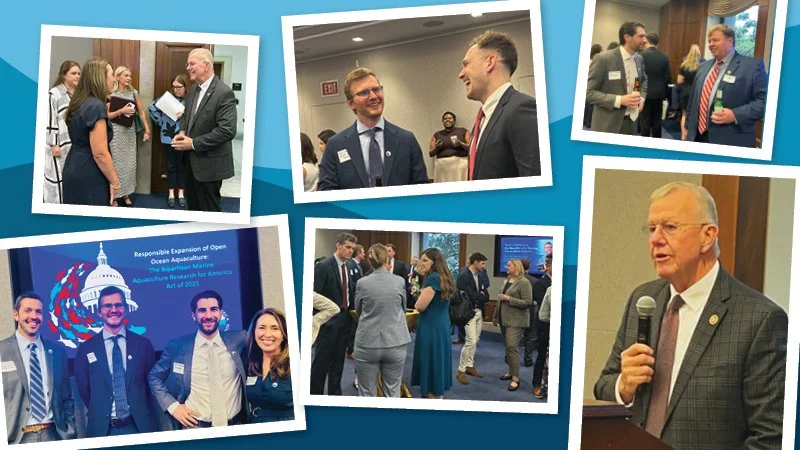
Industry leaders, congressional and administration staff, and Members of Congress gathered on Capitol Hill last week to discuss a key solution to the challenge of how the U.S. can keep up with rising seafood demand—while also supporting domestic producers and coastal communities. A May 13 legislative fly-in and seafood reception hosted by Stronger America Through Seafood (SATS) produced a rich discussion about the bipartisan Marine Aquaculture Research for America (MARA) Act of 2025, a science-based framework for commercial-scale open ocean aquaculture in U.S. federal waters. Rep. Mike Ezell (R-MS), a House co-sponsor of the MARA Act, spoke to a roomful of reception attendees about why he sees open aquaculture as an essential part of the country’s seafood future.
Read More
Feeding America in a Changing Climate Requires the Ocean
As climate change continues to disrupt food systems and increase pressure on land‑based agriculture, there is growing recognition that the ocean must play a larger role in meeting future demand. This Earth Month is an ideal time to recognize that U.S. open ocean aquaculture—when done responsibly and sustainably—offers one of the best pathways to producing more food while protecting the planet.
Read More
What It Will Take to Grow American Seafood: A Researcher Explains
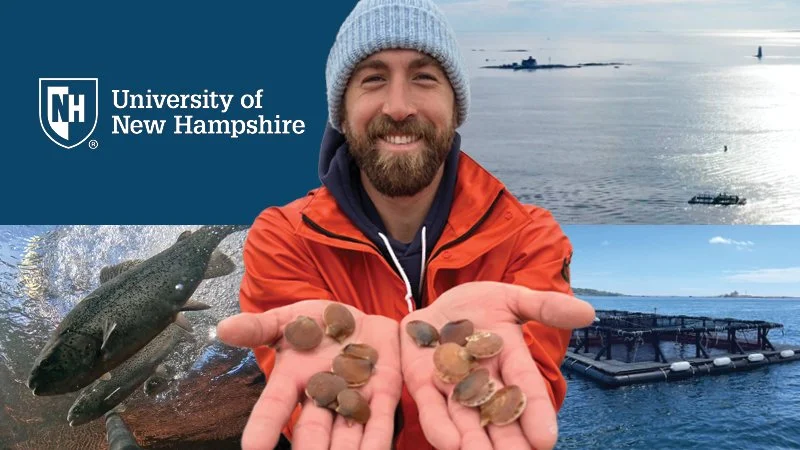
As the U.S. seeks to grow more seafood in U.S. waters, universities like the University of New Hampshire (UNH) are leading the way in education, training and science-based research to move the industry forward. To better understand what’s needed, Stronger America Through Seafood (SATS) interviewed Mike Coogan, a marine biologist and research assistant professor at UNH, to discuss why continued research investment and the creation of a federal pathway that supports open ocean aquaculture development in U.S. federal waters are essential to responsibly growing domestic seafood production and training the next-generation workforce.
Read More
Why Can’t America Grow More Seafood in its Own Waters?
Demand for sustainable protein is rising, yet the U.S. already harvests wild caught seafood at its sustainable limit. As a result, America imports most of the seafood we consume, half from fish farms in other countries. So, what’s holding the U.S. back from producing more of its own seafood, in its own waters? Three leading experts break down the challenges and opportunities of expanding American open ocean aquaculture in Stronger America Through Seafood (SATS)’s new three-part video series.
Read More
American Aquaculture Expansion Creates New Job Opportunities for the Next Generation
As bipartisan momentum builds around expanding domestic aquaculture and the industry emerges as a growing source of job creation for Americans in both coastal and inland states, universities across the country are expanding their aquaculture programs to train the next generation of aquaculture professionals.
Read More
Open Ocean Aquaculture Poised to Take Off in 2026
2025 has been a monumental year for U.S. open ocean aquaculture, with growing bipartisan momentum on Capitol Hill and expanding support from environmental organizations, seafood industry leaders, chefs, and academic experts. Together, these voices are aligning around a shared goal: increasing America’s supply of healthy, sustainable seafood by responsibly expanding domestic aquaculture in U.S. federal waters.
Read More
Aquaculture Expansion Will Create a New Market for America’s Soybean Farmers
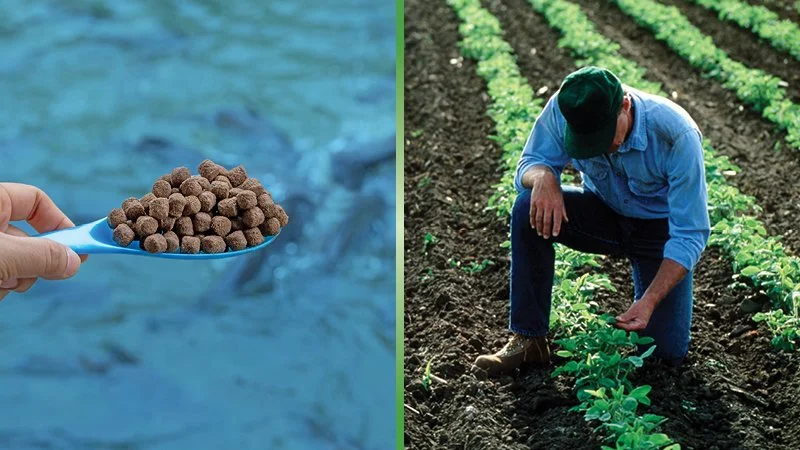
America’s oceans offer a powerful opportunity to help increase domestic seafood production, benefiting both families and farmers in the Heartland. While open ocean aquaculture cultivates seafood in deep water off the shore, the sustainable fish feeds that are supporting offshore fish farms include ingredients sourced across the U.S. The expansion of American aquaculture would increase demand for farm-raised crops, including soybeans, wheat and corn, which can be used in fish feed, creating new markets and opportunities for American farmers, many of whom continue to feel the impact of tariffs on their exported crops.
Read More
Celebrating National Seafood Month and the Aquaculture Industry’s Contributions
October is National Seafood Month, a time to celebrate the delicious seafood on our plates. Seafood is a healthy source of protein, rich in omega-3 fatty acids and essential vitamins and minerals that benefit our health, our economy, and our planet. And the aquaculture industry plays a key role in helping supply sustainable seafood to American families.
Read More
Bipartisan Momentum Grows as U.S. House Introduces Companion Bill to Advance Open Ocean Aquaculture
On October 14, U.S. Representatives Mike Ezell (R-MS), Ed Case (D-HI), Kat Cammack (R-FL) and Jimmy Panetta (D-CA) introduced the bipartisan Marine Aquaculture Research for America (MARA) Act of 2025, a bill that would strengthen America’s seafood industry by advancing commercial-scale open ocean aquaculture in U.S. federal waters. The bill is companion legislation to the bipartisan Senate measure (S.2586) introduced earlier this year by Senators Brian Schatz (D-HI) and Roger Wicker (R-MS).
Read More
Growing Bipartisan Support for Open Ocean Aquaculture Brings Industry Leaders to Capitol Hill
Seafood leaders and allies are heading to Capitol Hill this week for a two-day legislative fly-in hosted by Stronger America Through Seafood (SATS). Their message to Congress: expanding open ocean aquaculture in U.S. federal waters would help increase America’s seafood supply and create new jobs nationwide. Federal legislation is needed to create a pathway for open ocean aquaculture in America. The bipartisan Marine Aquaculture Research for America (MARA) Act of 2025 (S.2586), introduced in July 2025 by Sens. Brian Schatz (D-HI) and Roger Wicker (R-MS), would advance development of commercial-scale open ocean aquaculture farms in U.S. federal waters.
Read More
Interview with WWF's Aquaculture Expert on the Industry’s Trillion-Dollar Opportunity
This month, Stronger America Through Seafood (SATS) interviewed Dr. Sergio Nates, Senior Director for Aquaculture at the World Wildlife Fund (WWF), the world’s leading conservation organization. In July 2025, the World Wildlife Fund and the World Bank released a new report, Harnessing the Waters: A Trillion Dollar Investment Opportunity in Sustainable Aquaculture, which recognized aquaculture as one of the most promising opportunities for building a more sustainable food system over the next 25 years. The report found that aquaculture could generate 22 million new jobs by 2050 and presents a $1.5 trillion investment opportunity in the sector.
Read More
Read Our New Op-Ed in The Hill: Aquaculture can help produce more US seafood
In a new op-ed running in The Hill, campaign manager for Stronger America Through Seafood (SATS), Drue Banta Winters, explains how the expansion of aquaculture in federal waters can help increase our supply of American-raised seafood sustainably. New legislation in Congress, the bipartisan Marine Aquaculture Research for America Act of 2025 (S.2586), which was introduced last month by U.S. Senators Brian Schatz (D-HI) and Roger Wicker (R-MS), would help create a pathway for open ocean aquaculture in America.
Read the op-ed here.
Read More
New Bipartisan Bill Introduced in Congress to Advance Open Ocean Aquaculture
On July 31, Senators Brian Schatz (D-HI) and Roger Wicker (R-MS) introduced the bipartisan Marine Aquaculture Research for America (MARA) Act of 2025, a bill that would advance the development of commercial-scale open ocean aquaculture in U.S. federal waters—enabling the U.S. to responsibly grow more sustainable seafood domestically.
Read More
House Hearing Demonstrates Bipartisan Interest in Growing U.S. Aquaculture
Last week on Capitol Hill, Congress made clear there is bipartisan momentum for expanding U.S. aquaculture. The need for federal legislation to support expansion of U.S. aquaculture was also a key topic of conversation during a June 3 panel during Capitol Hill Ocean Week (CHOW) entitled, “Red, White and Blue Fisheries: Advancing U.S. Seafood Competitiveness.” There is growing bipartisan consensus in Congress—and strong support from seafood industry leaders, environmental groups, chefs, and academics—for legislation to expand U.S. aquaculture. The time for action is now. With the right federal policies in place, the U.S. will unlock the full potential of aquaculture and reclaim our position as a global leader in sustainable ocean food production.
Read More